DevSecOps Course in Telugu: Security in Fast Software
Introduction: Why Software Security Changed Forever
Software no longer lives in isolated systems. Today, applications connect users, devices, cloud platforms, and services across the world. These systems are updated constantly to keep up with user expectations and business demands. While this rapid evolution improves functionality, it also increases exposure to security risks.
Many security incidents happen not because attackers are highly skilled, but because security was added too late in the development process. This realization changed how software is built. Instead of securing applications after release, teams began embedding security directly into development workflows. This approach became known as DevSecOps. As awareness grows, learners increasingly look toward a DevSecOps course in Telugu to understand how modern software can remain secure without slowing down innovation.
From Isolated Teams to Integrated Workflows
Earlier software development models treated development, operations, and security as separate responsibilities. Developers focused on features, operations teams managed deployments, and security teams reviewed systems at the end.
This separation created delays and risks:
Security issues were discovered late
Fixes disrupted release schedules
Teams worked reactively instead of proactively
To solve this, development practices evolved toward collaboration and automation, setting the stage for DevSecOps.
What DevSecOps Is at Its Core
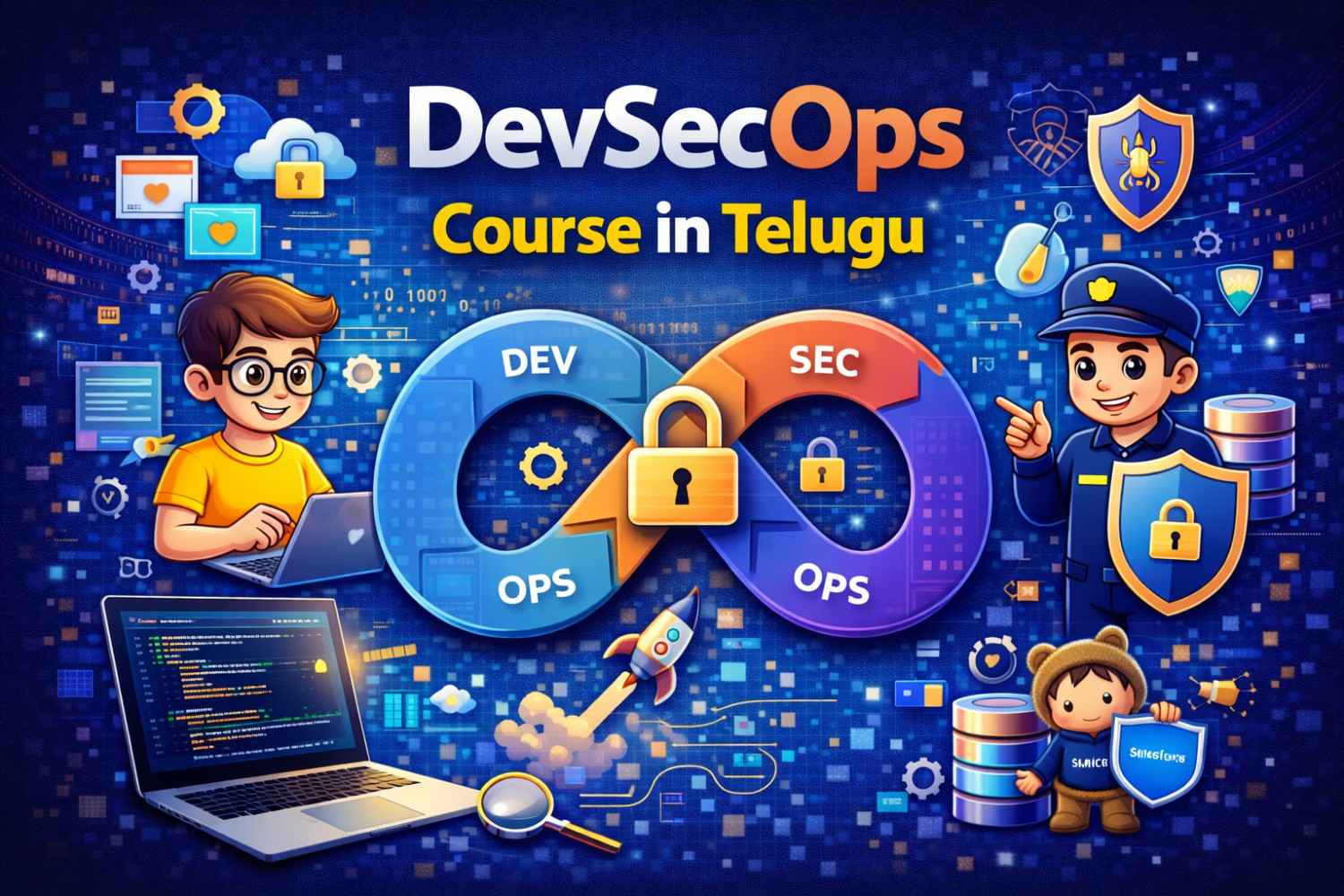
DevSecOps stands for Development, Security, and Operations. It is a method of building software where security is integrated into every stage of the development lifecycle.
Rather than viewing security as a final checklist, DevSecOps treats it as a continuous responsibility. Security checks, policies, and monitoring are included from the earliest planning stages through deployment and maintenance.
In simple terms, DevSecOps aims to build software that is secure by default.
Why DevSecOps Became Essential
The need for DevSecOps grew as software systems became more dynamic.
Some driving factors include:
Rapid release cycles
Widespread cloud adoption
Automation replacing manual processes
Increasing cyber threats
Traditional security models could not keep pace with these changes. DevSecOps emerged to address this gap by making security faster, automated, and scalable.
How DevSecOps Works in Modern Systems
DevSecOps relies on automation and integration.
Security tools are embedded into development pipelines so that:
Code is checked for vulnerabilities early
Dependencies are evaluated for risks
Infrastructure configurations are validated
Systems are monitored continuously
This allows teams to identify and resolve issues before they reach production.
Key Elements Explained Simply
A DevSecOps course in Telugu usually introduces learners to the following elements.
Secure Coding
Understanding how insecure code can lead to vulnerabilities and how to prevent common mistakes.
Automated Pipelines
Learning how continuous integration and deployment pipelines help maintain speed while ensuring safety.
Infrastructure Security
Understanding how cloud resources, servers, and containers are configured securely.
Continuous Monitoring
Learning how systems are observed to detect unusual behavior or threats.
These elements work together to protect modern applications.
DevSecOps in Cloud and Container Environments
Cloud platforms and container technologies allow applications to scale quickly. However, this flexibility introduces complexity.
Common risks include:
Misconfigured access controls
Exposed services
Inconsistent security policies
DevSecOps addresses these risks by applying security rules automatically and consistently across environments.
Why DevSecOps Matters Beyond Technology
DevSecOps is not only about tools; it also impacts how teams think and work.
Benefits include:
Fewer security surprises
Faster recovery from issues
Improved collaboration
Better system reliability
These benefits show why DevSecOps has become a core practice in modern software delivery.
Skills Gained Through DevSecOps Learning
DevSecOps encourages a balanced skill set.
Learners typically gain:
Understanding of software systems
Awareness of security threats
Logical and analytical thinking
Familiarity with automation concepts
Proactive problem-solving ability
These skills are valuable across multiple technology roles.
Why Learn DevSecOps in Telugu
Learning DevSecOps in Telugu helps learners understand security concepts, workflows, and automation processes more clearly. Using a familiar language makes it easier to grasp how development, operations, and security work together in real-world systems.
Who Should Explore DevSecOps?
DevSecOps is suitable for many types of learners.
Common groups include:
Students exploring modern IT concepts
Developers seeking security awareness
Operations professionals expanding knowledge
Technology enthusiasts interested in secure systems
A basic understanding of computers is enough to start learning.
Challenges in DevSecOps Learning
DevSecOps involves learning multiple areas at once, which can feel challenging:
Managing evolving tools
Understanding cross-functional responsibilities
Keeping up with new threats
However, these challenges also keep the field engaging and relevant.
DevSecOps as a Mindset Shift
DevSecOps represents a shift in mindset where security becomes a shared responsibility. Instead of reacting to issues, teams work proactively to prevent them.
This mindset encourages:
Collaboration
Transparency
Continuous improvement
Risk awareness
Understanding this cultural aspect is essential for applying DevSecOps effectively.
Conclusion: Can Security Keep Up With Innovation?
DevSecOps reflects how modern software must balance speed and protection. By embedding security into every stage of development and operations, systems can evolve quickly while remaining resilient. As technology continues to advance, understanding secure software practices becomes increasingly important.
If software systems are changing faster than ever and cyber risks continue to rise, how critical is it to understand DevSecOps today? And could starting with a DevSecOps course in Telugu be the most effective way to understand secure software development from the beginning?